
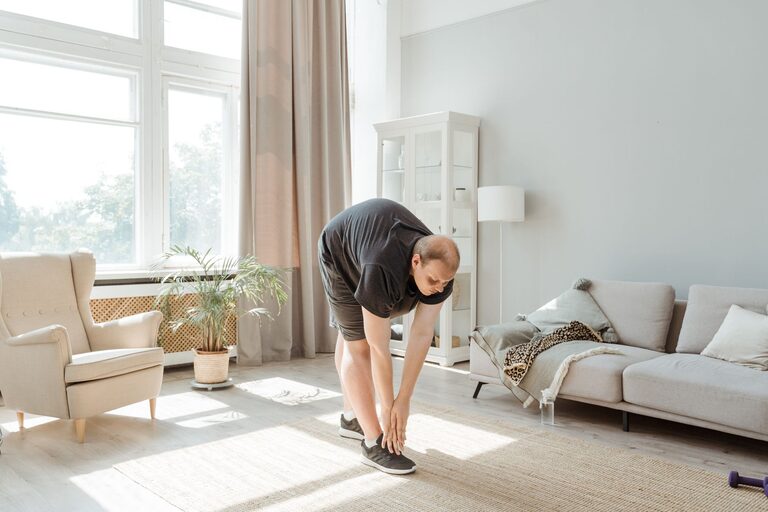
Staying active does not always require a long workout. A few minutes of gentle stretching throughout the day can help you move more comfortably, release everyday tension, and take regular breaks from sitting or standing in one position.
The key is consistency. Instead of waiting for one large block of free time, add short routines to moments you already have, such as after waking up, during a work break, or before bed. The following stretches are simple, require little space, and can be adjusted to suit your comfort level.
Stretching Basics to Keep in Mind
Before beginning, choose a comfortable area with enough room to move. Wear clothing that allows you to bend and reach without restriction.
Keep these tips in mind:
– Move slowly and avoid bouncing.
– Breathe steadily throughout each stretch.
– Stretch to the point of gentle tension, not pain.
– Hold most stretches for 15 to 30 seconds.
– Repeat each stretch once or twice.
– Use a wall, chair, or desk for balance when needed.
– Stop if a movement causes sharp pain, numbness, or unusual discomfort.
These routines are designed for general movement and everyday flexibility. If you have an injury, ongoing pain, or a condition that affects movement, consider asking a qualified professional which activities are appropriate for you.
A Five Minute Morning Routine
A short morning routine can help you ease into the day. Perform these movements beside your bed or in any open area.
1. Reach and Side Bend
Stand with your feet about hip-width apart. Raise both arms overhead and reach toward the ceiling. Then slowly lean to the right, return to center, and lean to the left.
Hold each side for 15 to 20 seconds. Keep both feet grounded and avoid collapsing forward.
2. Shoulder Rolls
Let your arms rest by your sides. Slowly roll your shoulders upward, backward, and down in a smooth circle. Complete five to ten circles, then reverse the direction.
This is an easy way to loosen the shoulder area after sleeping or spending time in one position.
3. Standing Chest Opener
Place your hands behind your back and gently hold one wrist or clasp your hands if that feels comfortable. Draw your shoulders back while lifting your chest slightly.
Keep your ribs relaxed and avoid forcing your arms upward. Hold for 15 to 20 seconds, then release.
4. Standing Back of Leg Stretch
Place one heel slightly forward with your toes pointing upward. Bend the opposite knee and hinge gently at your hips, keeping your back long. You should feel a light stretch along the back of the extended leg.
Hold for 15 to 30 seconds and switch sides. Use a wall or chair for support if needed.
A Desk Break Routine
Long periods at a desk can make the neck, shoulders, hips, and legs feel stiff. Set a reminder to stand and move every hour, even if the break lasts only a few minutes.
1. Neck Turns
Sit or stand tall with your shoulders relaxed. Slowly turn your head to look over your right shoulder, return to center, and then turn to the left.
Repeat three to five times on each side. Keep the movement gentle and avoid pulling on your head.
2. Upper Back Reach
Stretch both arms forward and interlace your fingers. Turn your palms away from you and gently reach forward while allowing your upper back to round slightly.
Keep your chin level and hold for 15 to 20 seconds. This movement can be done while seated or standing.
3. Seated Figure Four
Sit near the front of a sturdy chair with both feet on the floor. Place your right ankle over your left thigh. Keep your back comfortably straight and lean forward slightly until you feel a stretch around the outer hip.
Hold for 15 to 30 seconds, then switch sides. If the position feels uncomfortable, keep both feet on the floor and use a simple seated hip shift instead.
4. Standing Calf Stretch
Face a wall or desk and place both hands on it. Step one foot back, keeping the heel on the floor and the toes pointing forward. Bend the front knee slightly while keeping the back leg long.
Hold for 20 to 30 seconds and switch sides. This is especially useful after sitting for a long period.
A Midday Mobility Reset
Use this routine when your energy dips in the afternoon. It takes about five to seven minutes and encourages movement through several areas of the body.
1. Gentle Marching
Stand tall and march in place for 30 to 60 seconds. Swing your arms naturally and keep the pace easy.
This helps warm your body before the remaining stretches and gives you a short break from sitting.
2. Side to Side Reach
Raise your right arm and reach gently over your left side. Return to center, then switch arms. Move slowly from one side to the other for five repetitions per side.
Keep the motion comfortable and avoid twisting aggressively.
3. Standing Quad Stretch
Hold a wall or chair with one hand. Bend your opposite knee and bring your heel toward your seat, holding your ankle or pant leg if comfortable. Keep your knees close together and your torso upright.
Hold for 15 to 30 seconds, then switch sides. If reaching your foot is difficult, skip this stretch and perform a gentle standing knee bend instead.
4. Easy Forward Fold
Stand with your feet comfortably apart and soften your knees. Slowly hinge forward from your hips, allowing your arms to hang toward the floor or rest on your thighs.
Do not force your hands to the ground. Hold for 15 to 20 seconds, then slowly roll or hinge back to standing.
A Relaxing Evening Routine
An evening routine can help you transition away from daily activities. Keep the pace slow and use a mat, carpet, or folded blanket for comfort.
1. Kneeling Hip Stretch
Begin on one knee with the other foot placed in front. Keep your front knee above your ankle and gently shift your hips forward until you feel a stretch at the front of the hip of the kneeling leg.
Hold for 20 seconds, then switch sides. Place a cushion under the kneeling knee if needed.
2. Seated Forward Reach
Sit with your legs comfortably extended or slightly bent. Keep your spine long and reach your hands toward your thighs, shins, or feet without forcing the movement.
Hold for 20 to 30 seconds while breathing slowly.
3. Lying Knee to Chest
Lie on your back with both knees bent. Bring one knee toward your chest and hold behind the thigh or over the shin. Keep the other foot on the floor or extend the leg if that feels comfortable.
Hold for 15 to 30 seconds, then switch sides.
4. Relaxed Breathing Stretch
Lie comfortably or sit with your shoulders relaxed. Inhale slowly through your nose, allowing your ribs to expand. Exhale gently and let your body soften.
Repeat for five to ten breaths. This gives your routine a calm finish without requiring a deep stretch.
How to Make Stretching a Daily Habit
The most effective routine is one you can repeat regularly. Try connecting each routine to an existing part of your day:
– Stretch after brushing your teeth in the morning.
– Do a desk routine before lunch.
– Walk around and stretch during a screen break.
– Perform the evening routine after changing into comfortable clothes.
– Keep a reminder on your phone or calendar.
– Start with five minutes rather than aiming for a long session.
You can also choose two or three favorite stretches and repeat them whenever your body feels ready for a break. Small movement sessions add up over time and can make an otherwise sedentary day feel more balanced.
Keep It Comfortable and Consistent
Stretching should feel steady, controlled, and manageable. There is no need to force a deeper range or copy someone else’s flexibility. Focus on regular movement, relaxed breathing, and good awareness of how your body feels.
With a few simple routines placed throughout the day, you can create more opportunities to stand, move, and reset. The goal is not perfection. It is building an everyday habit that helps you stay comfortable and active from morning to evening.